by Susan Stamper •
Content Marketing Manager, ChiroHealthUSA •
Most of us would happily sign up for a few extra birthdays.
More cake? Sure.
More time with family? Absolutely.
A few extra years to travel, garden, golf, spoil the grandkids, chase the dog, or finally clean out that closet we’ve ignored since 2007?
Count us in.
But here’s the part nobody puts on the birthday card:
Living longer isn’t quite the same thing as living well longer.
That’s where healthspan comes in.
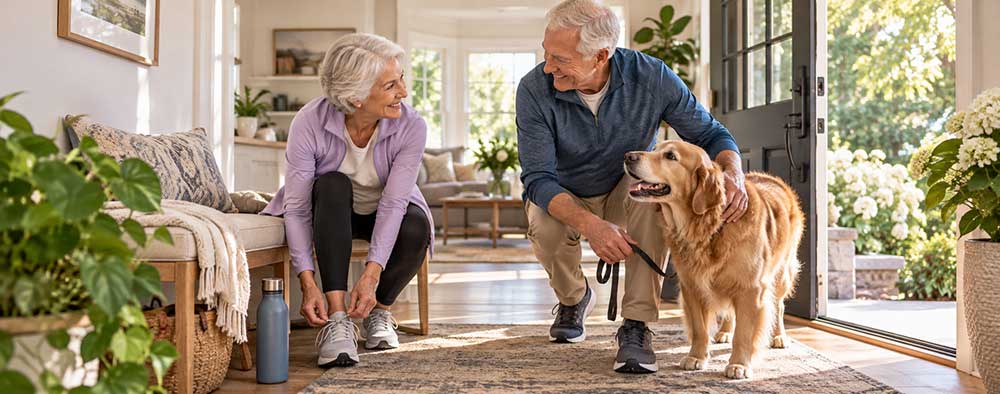
Because most of us aren’t dreaming about simply reaching 90. We’re hoping to reach 90 and still be able to put on our own shoes, climb the stairs, carry groceries, travel, and get out of a chair without needing a three-step game plan.
Nobody likes thinking about needing help getting dressed, going to the bathroom, or handling the basic things we’ve done independently for decades.
But as we get older, maybe the better question isn’t:
“How long will I live?”
It’s:
“How well can I live for as long as I’m here?”
Lifespan Counts the Years. Healthspan Counts the Good Ones.
Lifespan is simple.
It’s the number of years you live.
Healthspan is a little different. Researchers define it in several ways, but generally, it refers to the years you spend in relatively good health, able to function, stay independent, and enjoy life.
Think of it this way:
Lifespan counts the candles. Healthspan asks whether you can still blow them out yourself.
Healthy aging doesn’t mean reaching 80 without a single diagnosis. The World Health Organization focuses more on maintaining the ability to do what matters to you.
That may mean walking, driving, cooking, traveling, making decisions, seeing friends, caring for yourself, or simply living safely in your own home.
That’s the real heart of healthspan.
Not perfection.
Function.
We’re Finally Changing the Way We Talk About Aging
For years, wellness culture seemed obsessed with “anti-aging.”
Creams. Serums. Supplements. Potions.
If someone could bottle moonlight and put the word longevity on it, I’m fairly certain it would sell out by lunchtime.
But the conversation is changing.
The Global Wellness Institute identified functional longevity as a major healthy-aging trend for 2026.
Instead of asking whether we can look 40 at 70, more people are asking whether they can still move, think, travel, work, laugh, and live independently at 70.
And honestly, that seems like a much better goal.
Wrinkles aren’t keeping you from carrying the groceries.
Weak legs might.
Gray hair isn’t stopping you from getting off the toilet.
Poor balance might.
Maybe aging well isn’t about pretending we’re not getting older.
Maybe it’s about preparing ourselves so getting older doesn’t take more from us than it has to.
Strength Is Your Body’s Retirement Account 💪
We spend decades saving financially for retirement.
Maybe we should think about muscle the same way.
Strength is like a retirement account for your body. Every time you work your muscles, you’re making a small deposit.
You might not notice the return today.
But Future You may be very grateful when it’s time to climb stairs, carry a suitcase, or stand up from a low chair.
Research shows resistance training can improve strength and functional abilities in older adults, including walking, balance, grip strength, and chair-stand ability.
And before you picture yourself bench-pressing a Buick, relax.
Strength training can mean resistance bands, machines, body-weight exercises, or appropriately selected weights.
You don’t have to become a bodybuilder.
Your body would just appreciate not having to negotiate every staircase like a peace treaty.
Movement Matters More Than Perfection
Modern life has made sitting incredibly convenient.
We sit for work.
Sit in the car.
Sit at dinner.
Sit to watch television.
Then sit while scrolling through videos telling us we should move more.
It’s quite the little system we’ve created.
But movement matters.
Research has shown that structured physical activity can help reduce the risk of mobility disability in older adults.
That doesn’t mean you need to become a marathon runner.
Walk around the block.
Garden.
Dance in the kitchen.
Swim.
Ride a bike.
Play with the dog.
Park farther away.
Take the stairs when it makes sense.
The goal isn’t perfection.
It’s consistency.
You don’t need to go from couch potato to fitness influencer by Friday.
Just move more often.
Don’t Forget Balance
Balance is one of those things we rarely think about until it starts disappearing.
Falls can change everything, especially as we age.
Research has shown that exercise programs, particularly those involving balance and functional movement, can reduce the risk of falls in older adults.
That might mean tai chi, strength training, simple balance drills, or working with a healthcare or exercise professional.
And no, this does not mean balancing on one leg on top of your coffee table.
Please don’t.
The goal is to build confidence and stability—not audition for American Ninja Warrior.
Eat Like You Plan on Keeping This Body for a While 🥦
We’ve made food incredibly complicated.
There are diets.
Rules.
Good foods.
Bad foods.
Foods that were good last year but apparently got canceled over the weekend.
It’s exhausting.
When we’re talking about healthspan, maybe the better question isn’t:
“Will this make me skinny?”
Maybe it’s:
“Will this help support the body I’m hoping to use 20 years from now?”
Research on healthy aging consistently points toward eating patterns rich in fruits, vegetables, whole grains, nuts, legumes, healthy fats, and other nutrient-dense foods.
Translation?
You probably don’t need a mysterious berry harvested under a full moon.
Eat real food.
Get plenty of plants.
Get enough protein for your needs.
Choose minimally processed foods more often.
Enjoy dessert without writing yourself a formal apology afterward.
We’re playing the long game here.
Sleep and Connection Count, Too 😴
Sleep often gets whatever scraps are left at the end of the day.
Work comes first.
Laundry.
Emails.
Television.
Scrolling.
Then sleep gets shoved into whatever corner is left.
But sleep supports recovery, mood, cognition, and overall health.
And if you’re constantly exhausted, struggling with insomnia, snoring heavily, or feeling sleepy all day, don’t just assume that’s “part of getting older.”
Talk with your healthcare provider.
The same goes for connection.
Humans need other humans.
Research has linked loneliness and social isolation with poorer health outcomes in older adults.
So call your people.
Have dinner.
Join the group.
Go to church.
Volunteer.
Play cards.
Take the class.
Pickleball apparently has half the country in a headlock, so there’s always that.
Staying connected may be just as important as staying active.
Listen When Your Body Starts Whispering
Our bodies don’t always go straight from “everything’s fine” to “Houston, we have a problem.”
Sometimes there are whispers first.
Stiffness.
Weakness.
Balance changes.
Pain that keeps returning.
Getting winded more easily.
Needing your hands to push yourself out of a chair when you didn’t before.
Those things are worth paying attention to.
Not panicking over.
Not diagnosing through Google at 1:17 a.m.
Just noticing.
Keep up with appropriate screenings and healthcare visits. Manage conditions you already have. And if pain or mobility issues are keeping you from doing things you enjoy, talk with an appropriate healthcare provider.
Depending on the issue, that might include your physician, chiropractor, physical therapist, dietitian, or another qualified professional.
There is no magic longevity button.
But addressing problems that interfere with movement and function can be one piece of staying active longer.
Maybe We Don’t Need to Fight Aging
We talk about aging like it’s a boxing match.
Fight aging.
Defy aging.
Reverse aging.
Beat aging.
Good grief.
Getting older isn’t the enemy.
It’s actually the goal.
Maybe we don’t need to defeat aging.
Maybe we just need to prepare for it.
The goal doesn’t have to be looking 45 when you’re 75.
What if the goal is simply being 75 and still being able to say:
I can.
I can get out of this chair.
I can take the trip.
I can dress myself.
I can carry my groceries.
I can get on the floor with my grandkids.
I can meet friends for dinner.
I can keep participating in my own life.
That little sentence carries a lot of weight.
I can.
None of us gets complete control over how we age. Genetics, illness, injuries, and plain old life all get a vote.
But our daily choices still matter.
Move.
Build strength.
Work on balance.
Eat nourishing food.
Sleep.
Stay connected.
Deal with problems before they start shouting through a megaphone.
It’s not the Fountain of Youth.
It’s more like regular maintenance.
And maybe that’s okay.
So yes, hope for a long lifespan.
Celebrate every birthday. 🎂
Eat the cake.
Make the trip.
Call your people.
But while you’re adding years to your life, pay a little attention to how much life you’re adding to those years.
Because living longer sounds pretty wonderful.
Living longer while staying strong, capable, connected, and independent?
Now that’s the kind of longevity worth talking about.
Sources
Centers for Disease Control and Prevention. (2025). Older adults: Adding activity recommendations.
de Oliveira, S. N., Leonel, L., Delevatti, R. S., Heberle, I., & Moro, A. R. P. (2023). Effect of elastic resistance training on functional capacity in older adults: A systematic review with meta-analysis. Physiotherapy Theory and Practice, 39(12), 2553–2568. https://doi.org/10.1080/09593985.2022.2085219
Global Wellness Institute. (2026). Aging Well Initiative trends for 2026.
Masfiah, S., Kurnialandi, A., Meij, J. J., & Maier, A. B. (2025). Definitions of healthspan: A systematic review. Ageing Research Reviews, 111, 102806. https://doi.org/10.1016/j.arr.2025.102806
Nakou, A., et al. (2025). Loneliness, social isolation, and living alone: A comprehensive systematic review, meta-analysis, and meta-regression of mortality risks in older adults. Aging Clinical and Experimental Research.
Pahor, M., Guralnik, J. M., Ambrosius, W. T., et al. (2014). Effect of structured physical activity on prevention of major mobility disability in older adults: The LIFE study randomized clinical trial. JAMA, 311(23), 2387–2396. https://doi.org/10.1001/jama.2014.5616
Ravyts, S. G., & Dzierzewski, J. M. (2024). Sleep and healthy aging: A systematic review and path forward. Clinical Gerontologist, 47(3), 367–379. https://doi.org/10.1080/07317115.2022.2064789
Sherrington, C., Fairhall, N., Wallbank, G., et al. (2020). Exercise for preventing falls in older people living in the community: An abridged Cochrane systematic review. British Journal of Sports Medicine, 54(15), 885–891. https://doi.org/10.1136/bjsports-2019-101512
Tessier, A.-J., Wang, F., Ardisson Korat, A., et al. (2025). Optimal dietary patterns for healthy aging. Nature Medicine, 31, 1644–1652. https://doi.org/10.1038/s41591-025-03570-5
World Health Organization. (2021). Decade of healthy ageing: Baseline report. World Health Organization.
This article is intended for general educational purposes and is not a substitute for individualized medical advice.