
by Susan Stamper •
Content Marketing Manager, ChiroHealthUSA •
Sometimes getting the right answer starts with someone taking the time to listen.
This topic is personal for me.
For a year and a half, I advocated for my daughter’s healthcare. I asked questions, kept bringing up my concerns, and pushed for her doctor to investigate further. Eventually, that persistence led to the discovery of a cyst.
Experiences like that change the way you look at healthcare.
I am not saying every headache, stomachache, or lingering symptom points to a hidden diagnosis. Most do not. I am saying patients and parents often know when something still does not feel right, and they deserve to be heard.
Symptoms should never be brushed aside. They are often the first clue that something needs attention. But good healthcare should also look beyond the loudest complaint and listen to the whole story.
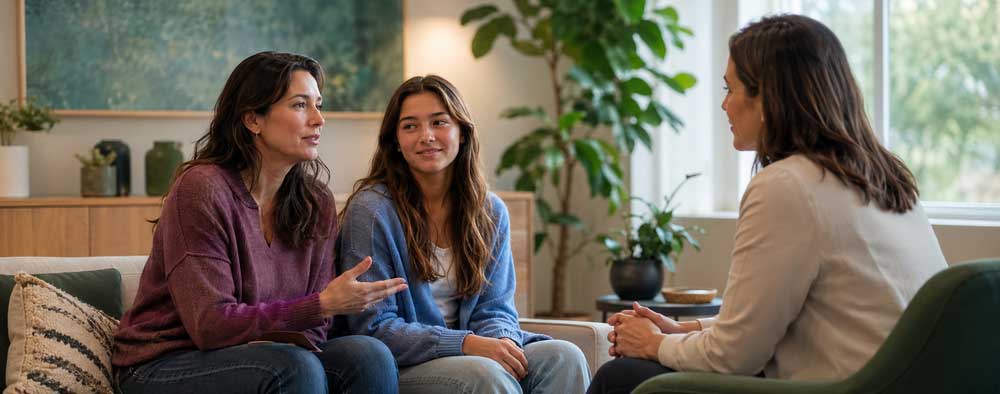
What if your provider did not simply quiet the symptom and send you on your way? What if they also asked how long it had been happening, what had changed, how it affected your daily life, and what other pieces might be connected?
That is the heart of whole-person care: paying attention to the symptom, respecting the person experiencing it, and being willing to look further when the pieces do not add up.
You Know Your Story Better Than Anyone
Healthcare providers bring education, experience, and clinical knowledge to the table. Patients and caregivers bring something equally important: the lived experience.
You know what is normal for your body or your child. You know when a symptom is new, when a pattern has changed, or when something keeps returning despite being told to give it time.
That does not mean we can diagnose ourselves with three internet searches and a suspicious mole. Google has convinced many perfectly healthy people that they have six rare diseases before breakfast.
It does mean our observations matter.
Whole-person care makes room for those observations. It treats the patient as part of the healthcare team instead of the person sitting quietly on the exam table while everyone else discusses the plot.
Sometimes the next step is reassurance. Sometimes it is a lifestyle change or a different treatment plan. Sometimes it is testing, imaging, or a referral to another provider.
The point is not that every symptom needs every test. The point is that persistent, worsening, unusual, or unexplained concerns deserve thoughtful follow-up.
Your Body Does Not Work in Separate Departments
It is easy to think of the body like an office building.
Headaches belong upstairs. Digestion works down the hall. Stress is somebody else’s department. The back and knees are in maintenance, and sleep apparently left early for the day.
In reality, everything is connected.
Poor sleep can leave you tired, irritable, and reaching for whatever food requires the least effort. Stress can show up as muscle tension, headaches, digestive trouble, or the sudden desire to move to a cabin where nobody can email you. Pain can make movement less appealing, and less movement can affect strength, energy, and mood.
One thing starts tugging on another, and before long your body feels like a string of Christmas lights pulled straight from the attic.
This is why treating one symptom in isolation may not always be enough. The symptom matters, but it may be only one clue.
Pain is a good example. Researchers know that pain can be influenced by biological, psychological, and social factors. Sleep, stress, mood, physical health, previous experiences, and daily demands can all shape how pain is felt (Raja et al., 2020).
That does not mean pain is “all in your head.” It means your body is more complicated than a dashboard light.
Sometimes the Root Cause Is a Root System
We love the phrase root cause because it sounds wonderfully simple.
Find the root. Fix the root. Roll credits.
Sometimes there really is one clear cause that needs specific care. Other times, several smaller factors have joined forces like a group chat nobody knows how to leave.
Maybe poor sleep is making stress harder to manage. Stress is adding tension. Tension is making movement uncomfortable. Less movement is affecting energy and strength. Meanwhile, the original symptom is still waving from the corner like, “Hello? Remember me?”
In those cases, the problem may look less like one stubborn weed and more like your grandmother’s wisteria. The roots are everywhere.
Whole-person care looks at those connections instead of chasing one symptom around the yard.
Holistic Does Not Have to Mean “Woo-Woo”
The word holistic sometimes gets a raised eyebrow.
To be clear, whole-person care should not mean replacing sound healthcare with good vibes, mystery powders, and a candle that claims to realign your entire life.
It should be practical, personalized, and evidence-based.
It may include conversations about:
- Physical symptoms and daily function
- Sleep and energy
- Movement and activity
- Nutrition and hydration
- Stress and emotional well-being
- Work and home demands
- Other health conditions or medications
- The goals that actually matter to you
It also means knowing when another healthcare professional should be involved. No single provider has every tool in the shed, and good care does not pretend otherwise.
The World Health Organization uses this broader approach in its guidance for chronic primary low back pain. Rather than suggesting one solution for everyone, it encourages care that considers physical, psychological, and social factors and may combine education, exercise, hands-on care, psychological support, or other appropriate options (World Health Organization, 2023).
The guidance focuses on back pain, but the larger point applies more broadly: you are not a symptom attached to a clipboard.
Feeling Better Is Good. Living Better Is the Goal.
Symptom relief matters. If your headache eases, your stomach settles, or your pain improves, that is worth celebrating.
But there is another question we should ask:
“Is my life getting better too?”
Research on pain care has shown that symptom intensity alone does not tell us everything about recovery. Physical function, emotional well-being, overall improvement, and the ability to participate in everyday life matter too (Turk et al., 2003).
For real people, progress may look like sleeping through the night, making it through a workday with more energy, returning to exercise, playing with the grandkids, or feeling confident enough to move without treating your body like a delicate porcelain teacup.
Most people are not dreaming of earning a gold star on a symptom chart. They want to live their lives.
Relief may open the door. Whole-person care helps you walk through it.
Better Care Makes You Part of the Team
When care focuses only on symptoms, patients can accidentally become passengers.
Something goes wrong. A provider fixes it. The patient waits for the next breakdown.
Whole-person care invites you into the process.
That might mean setting realistic goals, understanding your options, building healthier habits, or learning what you can do at home between visits. It should leave you feeling more informed and capable, not fragile or completely dependent on someone else to keep you functioning.
The words providers use matter too. Research involving people with low back pain found that frightening explanations can shape how patients think and behave, while clear and reassuring communication can help people feel more confident about appropriate activity (Darlow et al., 2013).
Good healthcare should help you understand your body, not make you afraid of it.
Where Chiropractic Care May Fit
Chiropractors commonly care for people with musculoskeletal concerns such as back pain, neck pain, and joint-related problems. Depending on the patient, care may include spinal manipulation or mobilization, exercises, education, conversations about healthy habits, and referrals when another type of evaluation is needed.
In a whole-person model, an adjustment is not treated like a magic wand. It is one possible tool in the toolbox.
The plan should fit the person, not the other way around. It should reflect your history, examination, goals, preferences, response, and progress. If something is not helping, the answer is not to keep doing it with more enthusiasm and better background music.
Personalized care should remain personal.
Ask a Better Question
Symptoms are important messengers. We should listen when they speak. We just should not hand them the microphone for the entire evening.
The next time you talk with a healthcare provider, try asking:
- What may be contributing to this?
- What can I do between visits?
- How will we measure progress beyond symptom relief?
- Could my daily habits be helping or hurting?
- When should another type of provider be involved?
Those questions move the conversation beyond “Where does it hurt?” and toward “What will help me live better?”
That is the real benefit of whole-person care.
It does not promise a perfect life without symptoms. Bodies are wonderful, complicated, occasionally dramatic things. They did not come with an owner’s manual, and they rarely follow a tidy script.
But healthcare can do more than place a Band-Aid over the loudest complaint.
It can help us see the bigger picture, build healthier habits, and feel better prepared for whatever is waiting down the trail. 🌲
This article is for educational purposes and is not a substitute for individualized medical advice. New, severe, progressive, or concerning symptoms should be evaluated by a qualified healthcare professional.
Sources
Darlow, B., Dowell, A., Baxter, G. D., Mathieson, F., Perry, M., & Dean, S. (2013). The enduring impact of what clinicians say to people with low back pain. Annals of Family Medicine, 11(6), 527–534. https://doi.org/10.1370/afm.1518
Raja, S. N., Carr, D. B., Cohen, M., Finnerup, N. B., Flor, H., Gibson, S., Keefe, F. J., Mogil, J. S., Ringkamp, M., Sluka, K. A., Song, X.-J., Stevens, B., Sullivan, M. D., Tutelman, P. R., Ushida, T., & Vader, K. (2020). The revised International Association for the Study of Pain definition of pain: Concepts, challenges, and compromises. Pain, 161(9), 1976–1982. https://doi.org/10.1097/j.pain.0000000000001939
Turk, D. C., Dworkin, R. H., Allen, R. R., Bellamy, N., Brandenburg, N., Carr, D. B., Cleeland, C., Dionne, R., Farrar, J. T., Galer, B. S., Hewitt, D. J., Jadad, A. R., Katz, N. P., Kramer, L. D., Manning, D. C., McCormick, C. G., McDermott, M. P., McGrath, P., Quessy, S., … Witter, J. (2003). Core outcome domains for chronic pain clinical trials: IMMPACT recommendations. Pain, 106(3), 337–345. https://doi.org/10.1016/j.pain.2003.08.001
World Health Organization. (2023). WHO guideline for non-surgical management of chronic primary low back pain in adults in primary and community care settings. https://www.who.int/publications/i/item/9789240081789