
by Susan Stamper •
Content Marketing Manager, ChiroHealthUSA •
How Bilateral Music Can Help Chiropractic Students Focus, Regulate Stress, and Survive the Grind
Introduction
Most chiropractic students have heard some version of this advice: put on classical music, power through the notes, and your brain will magically cooperate. Maybe it worked. More likely, it faded into background noise while stress kept tapping you on the shoulder. Heavy course loads, clinic shifts, boards prep, and the constant pressure to “get it right” don’t exactly respond to Mozart on command.
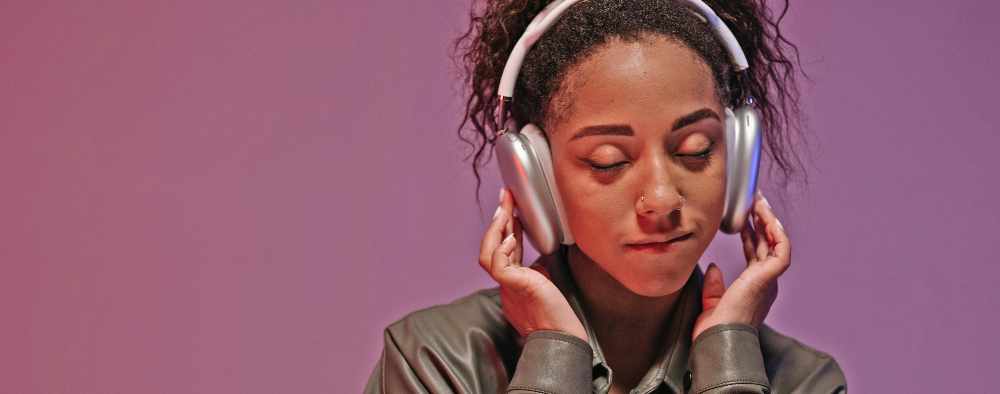
Lately, there’s a different kind of sound entering study sessions and wind-down routines: bilateral music. Instead of filling both ears with the same sound, bilateral music alternates rhythmically between the left and right ear. Headphones on. Beat shifts side to side. Nervous system exhales.
For students and early-career chiropractors juggling mental overload, emotional regulation, and poor sleep, this isn’t a gimmick. It’s a low-effort, science-backed tool that can support focus, stress regulation, and recovery. And yes, it fits into a chiropractic lens of nervous system function better than most study hacks floating around TikTok.
Let’s break down what bilateral music is, why it works, and how you can actually use it in real life without overthinking it.
What Is Bilateral Music, Really?
Bilateral music uses alternating auditory stimulation. Sound moves rhythmically from one ear to the other, creating a left-right pattern that engages both hemispheres of the brain.
This isn’t new. Bilateral stimulation has been used for decades in therapeutic settings, most famously in EMDR therapy. What’s changed is accessibility. You no longer need a clinician-guided session to benefit. Music-based bilateral stimulation is now widely available and easy to integrate into daily routines.
Key point: this is not about the genre. Classical, ambient, lo-fi, or nature-based tracks can all be bilateral. The mechanism is the alternating stimulation, not the melody.
Why It Works: A Nervous System Explanation That Actually Makes Sense
Chiropractic students live in the nervous system. So here’s the short, no-nonsense explanation.
Bilateral stimulation appears to:
- Promote communication between brain hemispheres
- Reduce limbic system overactivation
- Support parasympathetic engagement
- Improve emotional regulation and cognitive processing
In plain terms, it helps your brain stop spinning and start organizing.
Research suggests bilateral stimulation can lower perceived stress, improve focus, and support emotional regulation in both adults and students. Studies involving music-based bilateral stimulation show improvements in attention, mood regulation, and stress response, particularly in academic environments.
This matters because chronic sympathetic dominance is practically a prerequisite for chiropractic school. Constant deadlines, performance pressure, and information overload keep the system “on” far longer than it should be. Bilateral music gives the nervous system a patterned cue to settle without requiring you to meditate, journal, or overhaul your lifestyle.
Focus Without White-Knuckling It
Studying doesn’t fail because students are lazy. It fails because cognitive load gets too high.
Bilateral music can:
- Reduce mental noise
- Improve sustained attention
- Decrease task-related anxiety
Students exposed to bilateral music during study tasks have demonstrated better concentration and lower stress compared to standard background music or silence. That combination matters. Focus without emotional regulation just turns into burnout.
Practical use:
- Use bilateral music during review sessions, not during first-pass learning.
- Pair it with active recall, not passive reading.
- Keep volume moderate. This isn’t a sensory assault.
If your brain feels less “sticky” after 20 minutes, it’s doing its job.
Emotional Regulation During Clinic and Boards Prep
Clinic is where theory meets pressure. You’re being evaluated, timed, corrected, and watched. Emotional regulation becomes just as important as technique.
Bilateral stimulation has been shown to help regulate emotional responses by dampening overactivation of stress circuits. For students, this can mean:
- Less pre-visit anxiety
- Better recovery after difficult patient encounters
- Reduced emotional spillover between clinic and personal life
Boards prep is another beast entirely. Long-term stress paired with high stakes often leads to sleep disruption, irritability, and mental fatigue. Bilateral music doesn’t replace good study strategy, but it can improve your nervous system’s capacity to handle the load.
Use case:
- 10–20 minutes post-study to downshift
- Short sessions before sleep to improve regulation
- Brief listening sessions before exams or clinic shifts to reduce anticipatory stress
Sleep: The Most Ignored Performance Tool in Chiropractic School
Most students know they should sleep more. Fewer actually do anything about it.
Bilateral music has been associated with improved relaxation and sleep onset by reducing physiological arousal. For students who struggle to “turn off” their brain, this can be a useful bridge between study mode and sleep.
Important note: this isn’t sleep music in the spa sense. The goal isn’t sedation. It’s nervous system organization.
Tips:
- Use bilateral tracks designed for relaxation, not focus
- Keep sessions short. You don’t need it all night
- Consistency matters more than duration
Better sleep improves memory consolidation, emotional regulation, and learning efficiency. That’s not wellness fluff. That’s neurophysiology.
Chiropractic Perspective: Why This Fits the Philosophy
Chiropractic care centers on nervous system adaptability. Bilateral music supports that same principle through sensory input rather than physical adjustment.
Think of it as:
- A neurosensory hygiene tool
- A self-regulation strategy
- A non-invasive way to support adaptive capacity
This doesn’t compete with chiropractic care. It complements it. And for students who don’t yet have the luxury of perfect schedules or stress-free routines, accessible tools matter.
How to Use Bilateral Music Without Making It Weird
You don’t need to announce it. You don’t need to evangelize it. You just need to use it correctly.
Best practices
- Headphones required. Speakers defeat the purpose.
- Choose tracks labeled “bilateral” or “alternating.”
- Start with short sessions. Ten minutes is enough.
- Don’t multitask emotionally heavy content with it initially.
When not to use it
- During tasks requiring auditory processing
- While driving or performing procedures
- As background noise for everything all day
Used intentionally, it’s a tool. Used mindlessly, it’s just sound.
What This Is Not
Let’s be clear.
Bilateral music is not:
- A replacement for sleep
- A cure for anxiety disorders
- A shortcut around poor study habits
- A magic productivity hack
It’s a support strategy. A small lever that helps the nervous system do what it’s designed to do when given the right input.
Why Early-Career Chiropractors Should Pay Attention
Stress doesn’t magically disappear after graduation. If anything, it mutates.
Early practice brings:
- Financial pressure
- Patient communication challenges
- Decision fatigue
- Responsibility without a safety net
Developing self-regulation tools early matters. Bilateral music is one option that costs little, requires minimal effort, and aligns with how chiropractors already think about the nervous system.
You don’t need more willpower. You need better inputs.
Final Takeaway
Bilateral music isn’t trendy noise. It’s patterned sensory input with measurable effects on stress, focus, emotional regulation, and sleep. For chiropractic students and early-career chiropractors, that’s not a luxury. It’s a practical support tool.
If you’re already studying, already stressed, already trying to function at a high level, this is an easy experiment worth running. Put the headphones on. Let the beat move. See what your nervous system does when it’s finally given a rhythm instead of a demand.
Sources
Alfred Music. (2025). The science behind bilateral stimulation music in the classroom. https://www.alfred.com/blog/science-behind-bilateral-stimulation-music-classroom/
Dharmadhikari, A. (2025). Using bilateral stimulation to reduce stress in children and adolescents. DharmaDr. https://dharmadr.com/blogs/blog/using-bilateral-stimulation-to-reduce-stress-in-children-and-adolescents
Graduate Programs. (n.d.). Ways music can improve student mental health. https://www.graduateprogram.org/blog/ways-music-can-improve-student-mental-health/
Live Mindfully Psychotherapy. (2025). Bilateral stimulation. https://www.livemindfullypsychotherapy.com/blog/bilateral-stimulation
North Star Counseling & Wellness. (n.d.). The power of bio-bilateral music. https://www.northstarcw.com/the-power-of-bio-bilateral-music
Tonung, V. R. (n.d.). Effect of bilateral stimulation on students through music. https://www.vrtonung.de/en/effect-of-bilateral-stimulation-on-students-through-music/
U.S. National Library of Medicine. (2024). Bilateral stimulation and stress regulation. https://pmc.ncbi.nlm.nih.gov/articles/PMC12182183/
Brain Stimulation. (2024). Auditory bilateral stimulation and emotional regulation. https://www.brainstimjrnl.com/article/S1935-861X(24)00022-6/fulltext
Springer Nature. (2025). Bilateral stimulation in integrative health contexts. https://link.springer.com/article/10.1186/s12906-025-04922-x