
by Susan Stamper •
Content Marketing Manager, ChiroHealthUSA •
Water Is Trending… Yes, Really
Somewhere along the way, water became a lifestyle brand.
It used to just sit quietly in a glass. Now it’s living its best life inside $45 Stanley tumblers, rainbow iridescent gallon jugs, and bottles with hourly motivational quotes like “You got this!” and “Almost there!”
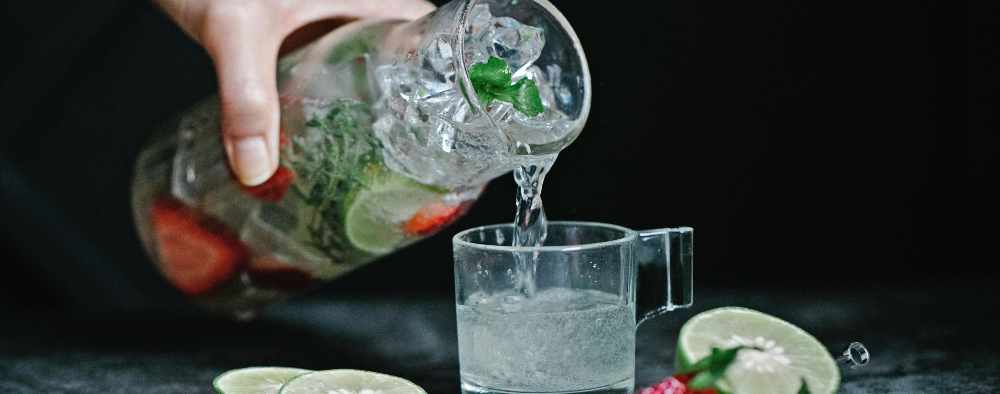
We’ve got water with cucumber. Water with lemon. Water with turmeric. Water with Himalayan salt. I’m fairly certain someone somewhere has added glitter and called it a detox. ✨
And honestly? If a cute cup or a slice of fruit makes you drink more water, we genuinely don’t see the harm.
But somewhere between hydration becoming trendy and TikTok hydration hacks going viral, a lot of… questionable advice started floating around.
Like:
- You must drink eight glasses of water a day
- You should drink half your body weight in ounces
- Coffee doesn’t count toward hydration
- If you feel thirsty, you’re already dangerously dehydrated
So let’s talk about it.
Because when it comes to hydration, some of the most popular advice is about as reliable as a weather forecast from a groundhog.
Let’s sort the hydration facts from the hydration myths.
Why Hydration Actually Matters
First things first: hydration IS important.
Your body is made of roughly 60% water, which means a large portion of your existence is essentially a walking, talking water balloon (Popkin et al., 2010).
Water helps your body:
- Regulate temperature
- Deliver nutrients to cells
- Lubricate joints
- Remove waste
- Support brain function
Even mild dehydration can cause symptoms like:
- Headaches
- Fatigue
- Brain fog
- Irritability
Basically, when your body runs low on water, everything gets a little crazy.
Myth #1: Everyone Needs 8 Glasses of Water a Day
The 8×8 rule is probably the most famous hydration guideline on the planet.
Eight 8-ounce glasses of water per day.
Simple. Memorable. Easy to repeat.
There’s just one tiny issue.
Science never actually proved it.
The rule likely originated from a 1945 nutrition recommendation suggesting people consume about 1 milliliter of water per calorie eaten. But the original guideline also noted that much of this water already comes from food (Valtin, 2002).
That important detail somehow vanished as the advice spread over the decades.
Today, researchers agree there is no single universal hydration number that works for everyone.
Because hydration needs depend on things like:
- Body size
- Activity level
- Climate
- Diet
- Health conditions
Someone hiking in Arizona in July needs a lot more water than someone sitting at a desk in air conditioning.
So… How Much Water Should You Actually Drink?
According to the National Academies of Sciences, total daily fluid intake averages about:
- 125 ounces per day for men
- 91 ounces per day for women
Before you panic and start chugging water like you’re preparing for a camel audition, remember something important.
That number includes fluids from food and other beverages.
Things that count toward hydration include:
- Coffee
- Tea
- Milk
- Juice
- Fruits
- Vegetables
- Soup
In fact, about 20% of daily water intake usually comes from food alone (National Academies of Sciences, 2004).
That apple? Hydration.
That salad? Hydration.
That bowl of soup? Hydration jackpot.
Myth #2: Coffee Dehydrates You
Coffee has been unfairly accused of dehydration crimes for decades.
Yes, caffeine has a mild diuretic effect. But research shows moderate coffee consumption does not cause dehydration in regular drinkers (Killer et al., 2014).
Translation:
Your morning coffee still counts toward your fluid intake.
So do:
- Tea
- Sparkling water
- Milk
- Sports drinks
Even soda technically hydrates you, although the sugar content makes it more of a “sometimes beverage” than an everyday choice.
But the idea that coffee cancels out hydration?
Not true.
Your iced latte is safe.
Myth #3: If You’re Thirsty, You’re Already Dehydrated
This one sounds dramatic enough to belong in a survival documentary.
But for most healthy adults, thirst is actually a very reliable signal.
Your brain constantly monitors the concentration of your blood and triggers thirst when fluids start running low.
In other words, your body already has a hydration alarm system built in.
There are a few exceptions where thirst may not be as reliable:
- Older adults
- Young children
- Endurance athletes in extreme heat
But for the majority of people, drinking when you’re thirsty works just fine.
Your body is smarter than hydration influencers.
Myth #4: More Water Automatically Means Better Health
Water is good.
But more water isn’t always better.
In rare cases, drinking excessive amounts can cause hyponatremia, a condition where sodium levels in the blood become dangerously diluted (Noakes, 2008).
This has occurred in endurance athletes who drank huge amounts of water during long races.
Symptoms can include:
- Headache
- Nausea
- Confusion
- In severe cases, seizures
The kidneys can process about 0.8 to 1 liter of water per hour, so extreme chugging can overwhelm the body.
So if someone on TikTok is telling you to drink a gallon of water every day no matter what, take that advice with a grain of… electrolytes.
Speaking of Electrolytes…
Hydration isn’t just about water.
Electrolytes like:
- Sodium
- Potassium
- Magnesium
help regulate fluid balance in your body.
When you sweat heavily during exercise or in hot weather, you lose both water and electrolytes.
That’s why athletes sometimes benefit from sports drinks or electrolyte replacements during intense activity (American College of Sports Medicine, 2016).
For everyday life though?
Plain water usually does the job perfectly.
The “Urine Color Test” (Yes, It’s Actually Useful)
There’s a surprisingly simple way to check your hydration level.
Just glance at the color of your urine.
Generally speaking:
- Pale yellow = well hydrated
- Dark yellow or amber = drink more water
It’s not perfect, since vitamins and certain foods can change urine color, but it’s a quick and easy hydration clue.
Not glamorous, but effective.
Trendy Hydration Hacks: Helpful or Just Hype?
Hydration trends are everywhere right now, so let’s break down a few of the popular ones.
Fruit-Infused Water
Totally fine.
Adding lemon, berries, or cucumber can make water taste better without adding sugar. If it helps you drink more water, go for it.
Salt in Water
For most people, unnecessary.
But people sweating heavily during long workouts may benefit from small electrolyte boosts.
Gallon Water Challenges
Usually excessive.
Unless you’re extremely active or working in high heat, your body probably doesn’t need that much water.
Fancy Water Bottles
Look, if a cute tumbler motivates you to hydrate, I support the emotional support water bottle movement.
Just maybe don’t buy twelve of them. Or do…🤷♀️
When Your Body Actually Needs More Water
Some situations naturally increase your hydration needs.
Exercise
Sweating during workouts means losing fluids that need to be replaced.
Hot Weather
Heat increases fluid loss through sweat.
Illness
Fever, vomiting, and diarrhea can quickly lead to dehydration.
Pregnancy and Breastfeeding
Fluid needs increase to support blood volume and milk production.
In these situations, paying extra attention to hydration becomes more important.
Practical Hydration Tips That Actually Work
Instead of obsessing over exact ounces, try these simple habits.
- Drink when you’re thirsty
- Carry a reusable water bottle
- Drink more fluids during exercise or heat
- Eat water-rich foods like fruits and vegetables
- Aim for pale yellow urine
Hydration doesn’t need to be complicated.
Your body has been managing this process long before hydration challenges showed up online.
The Bottom Line
Hydration advice on the internet can get a little… dramatic.
But here’s the reality.
- The 8-glass rule isn’t a universal requirement
- Coffee and tea still hydrate you
- Thirst is a reliable signal for most people
- Drinking excessive water can actually be harmful
- Your hydration needs depend on your lifestyle
So if you enjoy your giant Stanley cup, fruit-infused water, or your emotional support tumbler… keep doing you.
Just remember:
Hydration isn’t about chasing a magic number. It’s about listening to your body.
And maybe washing that water bottle once in a while. 😅
Sources
American College of Sports Medicine. (2016). Exercise and fluid replacement. Medicine & Science in Sports & Exercise.
https://journals.lww.com/acsm-msse/fulltext/2016/03000/exercise_and_fluid_replacement.22.aspx
Ganio, M. S., et al. (2011). Mild dehydration impairs cognitive performance and mood. Journal of Nutrition.
https://academic.oup.com/jn/article/141/4/745/4630595
Killer, S. C., et al. (2014). No evidence of dehydration with moderate daily coffee intake. PLOS ONE.
https://journals.plos.org/plosone/article?id=10.1371/journal.pone.0084154
National Academies of Sciences. (2004). Dietary Reference Intakes for Water.
https://nap.nationalacademies.org/catalog/10925/dietary-reference-intakes-for-water-potassium-sodium-chloride-and-sulfate
Noakes, T. D. (2008). Water intoxication: A possible complication during endurance exercise. Sports Medicine.
https://pubmed.ncbi.nlm.nih.gov/18354090
Popkin, B. M., D’Anci, K. E., & Rosenberg, I. H. (2010). Water, hydration, and health. Nutrition Reviews.
https://academic.oup.com/nutritionreviews/article/68/8/439/1842838
Valtin, H. (2002). Drink at least eight glasses of water a day. Really? American Journal of Physiology.
https://journals.physiology.org/doi/full/10.1152/ajpregu.00365.2002